


- Introduction
- The Problem With Traditional Classroom Models
- How AI Faculty’s Cognitive Intelligence Engine Works?
- Why Teachers Need Adaptive Learning Tools
- Real-Time Performance Intelligence
- Benefits for Schools and Coaching Institutes
- Why 2026 Is a Turning Point for Education?
- Smart Preparation for 2026 and Beyond
- Final Thoughts
- FAQs
Walk into any classroom today and you’ll see a familiar challenge.
One student finishes assignments before everyone else and gets bored. Another is quietly struggling because they missed a foundational concept weeks ago. Most students sit somewhere in between – completing tasks, passing tests, but never truly reaching their full academic potential.
For educators, this creates a constant balancing act.
Teachers are expected to deliver consistent academic outcomes while managing classrooms filled with students who learn at completely different speeds, retain information differently, and require unique support systems.
For decades, schools and coaching institutes have tried to solve this challenge through additional worksheets, extra tuition classes, and periodic assessments.
But in 2026, these traditional methods are no longer enough.
The future of education lies in adaptive learning technology – a system designed to personalize learning experiences for every student while helping institutions improve academic outcomes at scale.
At AI Faculty, we believe adaptive learning is not simply a digital upgrade. It represents a complete shift in how students learn, how teachers teach, and how institutions measure success.
The Problem With Traditional Classroom Models
Traditional education was designed around efficiency.
- One teacher.
- One classroom.
- One curriculum.
- One teaching pace.
While this model helped scale education globally, it also created a major flaw assuming all students learn the same way.
The reality is very different.
Within a single classroom, schools often manage three major learner categories:
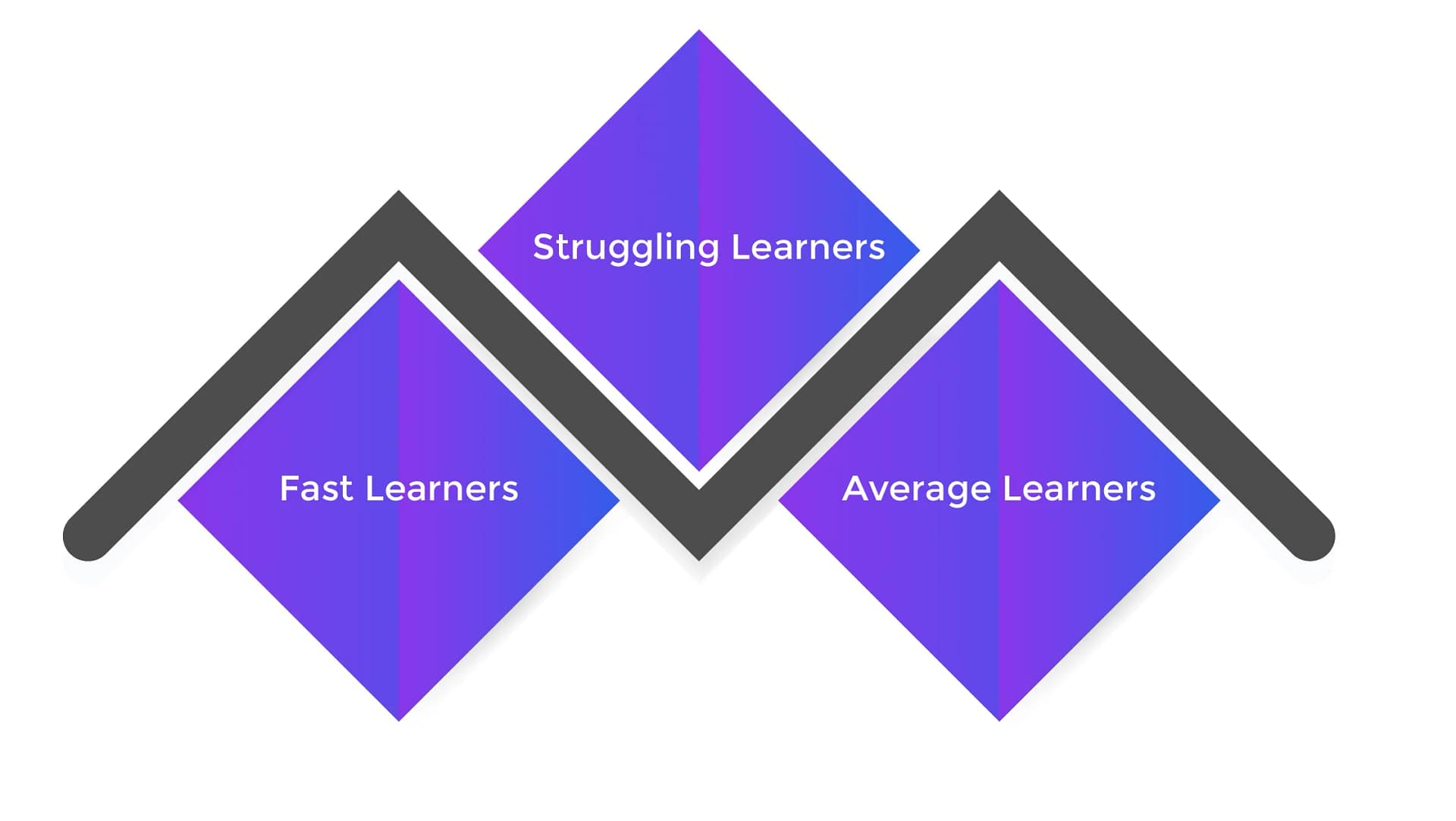
1. Fast Learners
These students quickly understand concepts and often finish tasks before their peers.
Without enough academic stimulation, they may lose focus or feel disengaged.
2. Struggling Learners
These students often fall behind because they missed earlier concepts that current lessons depend on.
Without personalized intervention, these learning gaps continue to grow.
3. Average Learners
These students perform adequately but may never unlock their full potential because the system is designed around average performance.
This one-size-fits-all model creates:
Lower student engagement
Increased academic stress
Poor retention rates
Teacher burnout
Inconsistent performance outcomes
As student expectations evolve, schools need systems capable of addressing individual learning needs.
What Is Adaptive Learning Technology?
Adaptive learning technology uses artificial intelligence, machine learning, and behavioral analytics to create personalized educational pathways for students.
Instead of forcing every learner through identical lessons, adaptive systems continuously adjust based on student behavior.
These platforms analyze:
Learning speed
Subject strengths
Weakness patterns
Retention rates
Problem-solving accuracy
Confidence levels
Based on this data, the platform recommends what each student should learn next.
This creates an individualized academic experience at scale.
How AI Faculty’s Cognitive Intelligence Engine Works?
At AI Faculty, we’ve built a Cognitive Intelligence Engine that goes beyond simple online learning tools.
Our system continuously evaluates how students interact with academic content.
It tracks:
Concept Mastery
The platform identifies precisely which concepts students understand and where they struggle.
For example, poor performance in algebra may actually stem from weaker arithmetic fundamentals.
The system identifies the root cause.
1. Learning Speed
Every student processes information differently.
Some require repetition.
Others need advanced challenges.
The platform adjusts learning paths accordingly.
2. Accuracy Patterns
The system tracks repeated mistakes to identify patterns in student performance.
This helps educators address recurring academic issues early.
3. Confidence Intelligence
The system tracks repeated mistakes to identify patterns in student performance.
This helps educators address recurring academic issues early.
4. Personalized Learning Paths in Action
Let’s say a student struggles with quadratic equations.
A traditional system may assign more quadratic equation practice.
AI Faculty takes a smarter approach.
The platform identifies whether the real issue lies in:
Basic factoring
Linear equations
Arithmetic weaknesses
Formula application confusion
Once the root issue is identified, the platform creates a customized learning sequence.
Students move forward only after mastering prerequisite concepts.
This significantly improves retention.
Why Teachers Need Adaptive Learning Tools
One of the biggest misconceptions surrounding AI in education is that it will replace teachers.
That isn’t happening.
Great teachers remain irreplaceable.
What AI does is eliminate repetitive administrative work.
Teachers spend significant time on:
Manual grading
Progress tracking
Creating remedial plans
Identifying weak students
Adaptive learning automates these tasks.
Teachers receive real-time dashboards showing:
Student progress
Weak areas
High performers
At-risk learners
This allows teachers to focus on:
Mentorship
Student engagement
Classroom interaction
Higher-level instruction
Real-Time Performance Intelligence
For competitive exams, performance isn’t only about accuracy. Speed matters equally.
Students preparing for exams like:
JEE
NEET
CAT
UPSC
GMAT
Need to solve questions quickly under pressure.
AI Faculty tracks:
Speed
Accuracy
Time efficiency
Retention
Performance trends
If a student answers correctly but too slowly, the platform introduces speed-based practice modules.
If accuracy declines under pressure, the platform slows the pace to improve concept understanding.
Benefits for Schools and Coaching Institutes
Institutions adopting adaptive learning platforms see measurable improvements. These include:
- Higher Student Success Rates – Personalized interventions improve academic performance.
- Better Retention Rates – Students remain engaged when learning feels personalized.
- Improved Faculty Productivity – Teachers save time through automation.
- Better Parent Satisfaction – Parents appreciate measurable academic progress.
- Competitive Institutional Advantage – Technology-driven schools attract more admissions.
Why 2026 Is a Turning Point for Education?
Students today expect personalized experiences in every aspect of life.
Education cannot remain static.
Institutions that fail to modernize risk falling behind competitors who embrace smarter learning systems.
Adaptive learning helps schools move from reactive teaching to proactive learning optimization.
Smart Preparation for 2026 and Beyond
The educational institutions that will thrive over the next few years are those that stop guessing and start knowing. By utilizing adaptive learning technology, you are not just buying software; you are installing a system of measurable confidence.
Students enter their exams not just hoping they studied the right things, but knowing they have mastered every concept on their personalized path. For institutions, this means higher success rates, better reputations, and a significantly reduced burnout rate for faculty.
Final Thoughts
The future of education is not about replacing teachers with machines.
It’s about giving educators better tools to create better outcomes.
Adaptive learning technology empowers schools to personalize education, improve academic performance, reduce teacher burnout, and prepare students for long-term success.
At AI Faculty, we’re helping institutions build smarter classrooms – one student at a time.
FAQs
1. Is adaptive learning technology difficult to implement in existing schools?
Not at all. AI Faculty is designed to integrate effortlessly. We provide personalized dashboards for faculty and easy-to-use interfaces for students, requiring minimal setup time.
2. Can AI really help with multilingual classrooms?
Yes. Our AI voice agents offer multilingual learning assistance, making high-quality education accessible regardless of the student’s primary language.
3. How does the AI know when a student is ready for an exam?
We use predictive analytics based on accuracy, speed, and mastery trends. The platform flags risks early, allowing you to provide targeted support well before the actual exam date.
4. Does this technology work for all subjects?
While particularly effective for structured subjects like Math, Science, and competitive test prep, the logic of “gap identification” and “personalized pacing” applies across the entire academic spectrum.
5. Ready to see how AI Faculty can transform your institution?
Explore our services and discover how we can help you bridge the learning gap today. Let’s make education smarter, together.


Get Started with AIFaculty Today.
Pick the tools that best suits your business requirement. Level up your marketing and drive desired outcomes.